
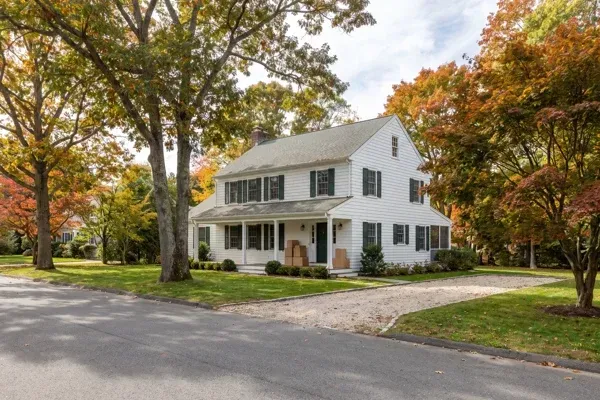
Renovate or Move? Deciding to Stay Put on Long Island
By Lior Golan, Founder, Prestige Custom Building & Construction. Last updated September 2026.
One of the questions I hear most from owners is whether to renovate, add on or start over. A ranch owner texted us to ask whether to go up or buy something newer. Others ask us about houses for sale. If you like your street but not your house, that’s the renovate or move question, and on Long Island both answers cost real money.
Here’s how I’d lay it out as a builder: what selling and buying costs, when renovating wins, when moving wins, and the path people forget, knocking the house down and building new on the lot you already love. This is information, not tax or legal advice. Your accountant and your attorney should run your numbers.
Key Takeaways
- Selling and buying in New York carries taxes that go into neither house: a state transfer tax of $2 for each $500 of the price, paid by the seller, and a 1% mansion tax on residences of $1 million or more, paid by the buyer (NYS Department of Taxation and Finance, 2026).
- Broker commissions in New York aren’t set by statute or regulation, so the amount and terms are negotiable (NY Department of State).
- Renovating usually makes the most sense when the lot and the location are right and the house can become what you need without a substantial zoning variance.
- New York requires an asbestos survey before renovation, remodeling, repair and demolition work (NYS Department of Labor, 2026).
- If the house itself is the problem, keeping the lot and rebuilding is a third path.
Should You Renovate or Move When You Love Where You Live?
If you love the location and your lot can hold the house you need, price the renovation before you list. Moving means paying costs that go into neither house (more on those below).
That doesn’t make renovating the automatic answer. It means comparing the price of turning your house into the one you want with everything it takes to sell, buy and move into a house that’s closer to it. It’s easy to price only one side.
So ask yourself 3 questions. Do you want to stay on this street? Can the house become what you need on this lot, under its zoning? And is the house worth keeping at all, or is it really the lot you want?
What Does It Really Cost to Sell and Buy on Long Island?
To sell and buy, you pay the state transfer tax on your sale, a broker’s commission if you list with one, and, on a purchase of $1 million or more, a 1% mansion tax (NYS Department of Taxation and Finance, 2026).
| Cost of moving | Who pays or decides | What the official source says |
|---|---|---|
| State real estate transfer tax | The seller (the buyer, if the seller doesn’t pay or is exempt) | $2 for each $500 of the price |
| Mansion tax | The buyer | 1% of the price on residences of $1 million or more |
| Broker’s commission | Agreed between you and your broker before the home is listed | Not set by statute or regulation; the amount and terms are negotiable |
| Tax on your gain, if any | The seller | Up to $250,000 of gain on a main home can be excluded, or $500,000 on a joint return, if you qualify (IRS, 2026) |
| Legal and closing costs, any local transfer tax, movers, storage, any overlap between homes | Both sides of each deal | No official figure; get written estimates from your attorney and your mover |
In a sell-and-buy you’re the seller once and the buyer once, so you pay both taxes (the mansion tax if the purchase is $1 million or more). None of it goes into the house you’ll live in.
I won’t quote a commission rate, because New York doesn’t set one (NY Department of State). Get the figure in writing before you compare it with a renovation price.
When Does Renovating Beat Moving?
Renovating usually wins when the location is the thing you can’t replace and the house has good bones: a sound structure and a layout you can work with instead of fight. The money goes into the house you’ll live in, not into transfer taxes, commissions and a move.
The next test is room to grow. An owner once wrote to us that they wanted to see their limits before planning, so they could avoid variances. That’s the right order. Setbacks, height and lot coverage are among the limits that decide whether a second story or an addition fits. If it doesn’t, the zoning board of appeals weighs, among other factors, whether you could get the same benefit without a variance and whether the variance you’re asking for is substantial (NY Department of State, 2026).
Our notes on dormer additions on Long Island and planning a house extension cover the first questions, and the Long Island custom home permit and approvals process shows what approvals involve.
Then price the renovation honestly. Our renovations start from $500K, typically $380-430 per square foot, all-in. Where your house lands depends on how much of it you open up. Our post on what a gut renovation costs on Long Island covers what drives renovation costs, and our home renovations page shows how we scope one.
Some line items come with any renovation, and older houses add their own. New York requires an asbestos survey before renovation, remodeling, repair and demolition work (NYS Department of Labor, 2026). The EPA says “approximately three-quarters of the homes in the United States built before 1978 still contain some lead-based paint” (EPA, 2026). Neither is a reason not to renovate. Both belong in the number before you compare it with moving.
A whole-house renovation is also disruptive, and depending on the scope you may need to live elsewhere during the work. Our guide on how to prepare for a whole-house renovation covers the practical side.
When Does Moving Beat Renovating?
Moving usually wins when the problem is the location, not the house. If you’d trade your street for a different town, a different school district or a shorter commute, no renovation fixes that. The taxes, the commission and the move are simply the price of getting there.
It also wins when the lot says no. If what you need would take a substantial variance, a renovation stops making sense, and a house that already fits may be the better answer.
One owner who contacted us ended up buying a house that didn’t need work. When the right house comes up, that’s a good outcome, and better than a renovation you don’t really want. Our comparison of building new vs buying an existing home on the Gold Coast covers the buying side in more depth.
Moving can also make sense if you don’t want to run a project. A renovation asks for a lot of decisions while you live around the work or away from it.
Whichever way you lean, our free custom home planning guide walks through the questions worth answering before you ask any builder for a price.
What If the House Is the Problem, Not the Neighborhood?
Then keep the lot and replace the house. A knockdown and rebuild fits when the structure, the systems and the layout all need to be redone anyway, so a renovation would spend most of its budget replacing what’s there.
On the lot you already own, this path skips the transfer and mansion taxes of a move, because you’re not selling or buying. You trade them for demolition and a full build. I cover how that works on a North Shore lot in knockdown-rebuild on the Gold Coast, and our guide to the cost to build a custom home on Long Island goes through the budget.
If you’d rather buy a house to knock down, the mansion tax still applies to that purchase if the price is $1 million or more. If you’re looking at houses for sale with a rebuild in mind, I ask for the survey of each one, so we can check what the zoning allows before you commit. It’s the most disruptive of the 3 paths and the one that gives you the most control over the result. Our take on whether building a custom home is worth it lays out the case, and our custom home building page shows how we work.
How Do You Decide Between Renovating, Moving and Rebuilding?
Put the 3 paths side by side on the same terms: what each costs that goes into neither house, what drives the rest of the cost, how much disruption it brings and how much control you keep. Here’s how I’d frame it:
| Renovate and stay | Sell and buy | Knock down and rebuild on your lot | |
|---|---|---|---|
| Costs that go into neither house | Temporary housing, if you move out during the work | Transfer tax on the sale, mansion tax on a purchase of $1 million or more, commission, any local transfer tax, legal and moving costs | No sale or purchase taxes; temporary housing during the build |
| What drives the rest | How much of the house you open up, and what an older house needs | The price of a house that fits | Demolition, site work, and the size and finish level of the new home |
| Disruption | High while the work is underway | A sale, a purchase and a move | Highest; you live elsewhere for the whole build |
| Control over the result | High, within the existing structure and the zoning | Low; you take the house as it is | Highest; built to your plan, within the zoning |
| Best when | The location is right and the house has good bones | A house that fits exists and you’re ready to go | The lot is right and the house isn’t |
Then gather 4 things: a sale range and the commission in writing from a broker, closing cost estimates from your attorney for both deals, a renovation or rebuild price based on a real scope, and your accountant’s view of how a sale would be taxed. Put all 4 on one page before you decide.
Frequently Asked Questions
Is the mansion tax charged on the whole price?
Yes. New York’s mansion tax is 1% of the sale price on residences where the consideration is $1 million or more, and the buyer pays it (NYS Department of Taxation and Finance, 2026). If the buyer doesn’t pay or is exempt, the seller must. Ask your attorney how it shows up on your closing statement.
Do you pay tax on the profit when you sell your home?
Maybe not all of it. The IRS says you may qualify to exclude up to $250,000 of gain on the sale of your main home, or up to $500,000 on a joint return. In general, you must meet its ownership and use tests (IRS, 2026). If your gain could be larger, ask your accountant to run the numbers before you sell.
Are real estate commissions set by law in New York?
No. The New York Department of State says a broker’s compensation “is not regulated by statute or regulation, therefore the amount and terms are negotiable” (NY Department of State). You and the broker agree on it before the home is listed, so ask for the figure in writing.
Do you need an asbestos survey before renovating a house in New York?
Yes. The state’s asbestos rule “requires an asbestos survey be performed prior to all interior and exterior renovation, remodeling, repair and demolition work” (NYS Department of Labor, 2026). The survey identifies asbestos materials the work may disturb, so plan for it before the renovation is priced.
Should you worry about lead paint in an older Long Island house?
If it was built before 1978, find out before the work starts. The EPA says any renovation, repair or painting project in a pre-1978 home that has lead-based paint “can easily create dangerous lead dust” (EPA, 2026). It’s something to price into a renovation, not a reason to rule one out.
If you like where you live and you’re not sure the house can get there, that’s worth a conversation before you decide. Book a consultation and tell me what isn’t working in the house and what you’d want instead. You’ll talk with me directly. I’ve spent 30+ years building on Long Island, with 100+ homes built and renovated, and we take on only 5-6 projects a year, so I’ll tell you plainly whether your house is worth renovating.
Lior Golan is the founder of Prestige Custom Building & Construction, a custom home builder serving Long Island’s Gold Coast and the Hamptons. Over more than 30 years he has guided over 100 custom homes and renovations across the North Shore, from Roslyn and Sands Point to Cold Spring Harbor.

